





Online newspaper based in Matera
EcocNews is registered at the Court of Matera in the press register n. 2/2021
Editor in chief: Mariateresa Cascino. Founder and editorial director: Serafino Paternoster
via San Francesco, 1 - 75100 Matera (Italy)



Victoria will be Malta's European Capital of Culture in 2031. (Maybe). It will share the title with one of the 12 Spanish cities that have decided to apply.
The legacy of European Capitals of Culture is fundamental to truly changing the destiny of cities that have earned this title. Often, however, this legacy simply translates, at best, into a continuation of events that characterised the year as capital, while the work done during the application process, especially with the community, gradually melts away like snow in the sun.
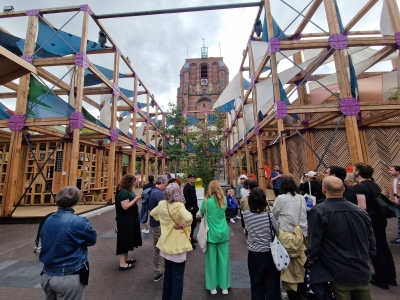
Two European Capitals of Culture, Nova Gorica 2025 and Bad Ischl Salzkammergut 2024, will host an artistic residency to regenerate a series of monuments. The project is called DECORATOR artistic residencies 2025 and involves several regions of the Danube in Europe, with a focus on Slovenia, Croatia, Austria, and Germany. Deadline: 31 October 2025.
Niksic (Montenegro) will be one of the three European Capitals of Culture in 2030. This was announced today by the chair of the European Commission's evaluation panel, Hrvoje Laurenta.
The organisers of Tartu 2024 presented a digital book entitled Tartu 2024: The Story of Survival at the Kultuurikompass Forum, which recounts Tartu and Southern Estonia's year as European Capital of Culture.
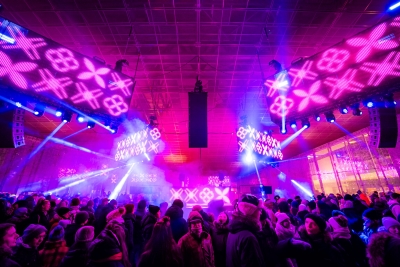
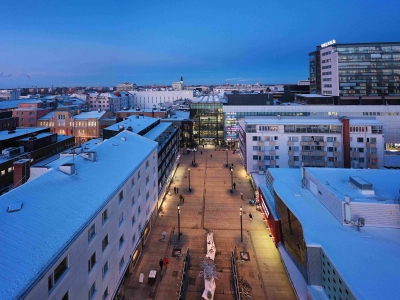
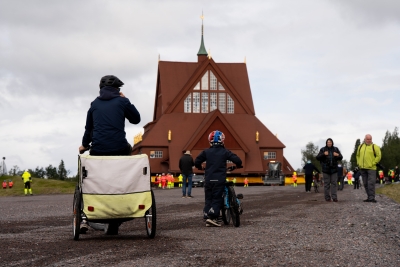
In just 100 days, Oulu and its 39 partner municipalities in Northern Finland will open their year as European Capital of Culture. Excitement is building across the region as final preparations are underway – and the official event calendar, featuring thousands of cultural experiences throughout 2026, has just been published.
Something is beginning to stir in the two countries that will host the European Capital of Culture in 2033: Italy and the Netherlands.
Under the umbrella of Smart Tourism, the European Commission has launched two competitions to promote smart and sustainable tourism in the EU, network and strengthen destinations, and facilitate the exchange of best practices.
In Netherlands, as in Italy, only a handful of cities have announced their intention to compete to become European Capital of Culture in 2033.
I have always believed that cities are living organisms, with their streets acting as arteries in the human body, transporting blood and lives. Cities – as I wrote in my book Le città invincibili – L’esempio di Matera 2019 (Invincible Cities – The Example of Matera 2019) – are not immobile urban agglomerations. If that were the case, they would be doomed to certain death, a bit like what is happening in small villages where everything has remained as it once was and perhaps for this very reason they are destined for a future with few prospects.
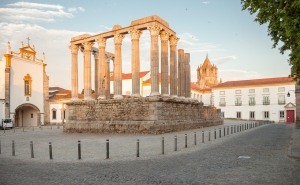
The European Commission has published the Second Monitoring Report on the progress of Évora_27 – European Capital of Culture, stating that the management of the initiative “is on the right track.”
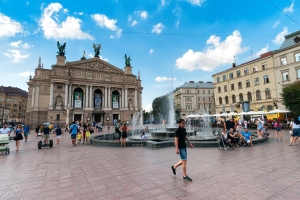
There will be three European capitals of culture in 2030. One will be designated by Cyprus, the other by Belgium, and the third will be chosen between Nikšić (Montenegro) and Lviv (Ukraine). For all three countries we have entered the shortlist phase and therefore the cities have been working around their cultural projects for some time.
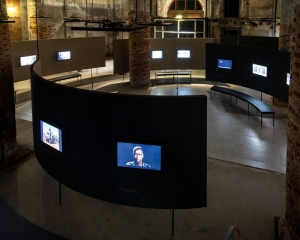
After being presented at the Venice Biennale last year, the site-specific project “Disobedience Archive” makes a stop in Trencin, European Capital of Culture 2026 in a Site specific installation, designed by Zbyněk Baladrán.
The Spanish city's bid plans to move along 9 thematic axes: Cultural and Digital Innovation; Heritage and Sustainability; Creative and Sustainable Tourism; Social Cohesion, Inclusion and Multiculturalism; European Dimension; Spaces for Culture; Training and Education; Dissemination and Awareness; Employment and Cultural Entrepreneurship.
There is a lot of excitement surrounding the European Capitals of Culture. In fact, there are an increasing number of initiatives, both at national level, in individual countries, and at international level, involving several countries, aimed at exploring individual aspects of the European Capital of Culture programme in greater depth.
The engines are warming up of some cities that have decided to run for the title of European Capital of Culture 2033. They are still few in number and can be counted, to date, on the fingers of one hand.
12 months of meetings, art and dialogue, with a launch event on 28 November 2025 on the Mediterranean Day, the opening on 20 March on the International Day of Happiness, and then festivals, reviews, international forums on the themes of environment and territories, digital transformations, human development and quality of life, relations and social ties, which will make the Mediterranean a platform for experimentation.
Starting on Friday 16 May, a cycle of online meetings open to the public will kick off, dedicated to the challenges and opportunities of curating in the digital age, promoted by the Fondazione Matera Basilicata 2019, leader of the Basilicata Digital Academy network, in collaboration with CNA Matera and Confapi Matera, as part of the TOCC ‘Airfare’ project.
Online newspaper based in Matera
EcocNews is registered at the Court of Matera in the press register n. 2/2021
Editor in chief: Mariateresa Cascino. Founder and editorial director: Serafino Paternoster
via San Francesco, 1 - 75100 Matera (Italy)