





Online newspaper based in Matera
EcocNews is registered at the Court of Matera in the press register n. 2/2021
Editor in chief: Mariateresa Cascino. Founder and editorial director: Serafino Paternoster
via San Francesco, 1 - 75100 Matera (Italy)



The city of Turku in southwest Finland has announced that Sigge Architects is the winner of an international architecture competition to design the world’s first Museum of History and the Future.
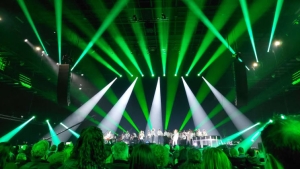
The 'Les Francofolies' festival is the largest international festival of contemporary Francophone music, which has been held since 1985 in the city of La Rochelle, France, but has also moved to various locations around the world.
There is an increasingly important issue affecting cities and the lives of citizens: it is the relationship between the centre and the neighbourhood.
Can culture help citizens out of social apathy? Probably yes. That is why the Portuguese city of Braga, national capital of culture for 2025, has launched a call as part of the project 'desejar', desire. Deadline: april 15 2024.
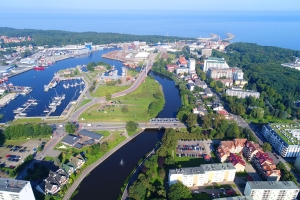
The month of September will be very important for a number of European cities that want to win the title of European Capital of Culture. In September, in fact, the evaluation panel will have to suggest the European Capital of Culture 2029 for Poland, choosing among the four short-listed cities: Bielsko-Biała, Katowice, Kołobrzeg, Lublin. And also in September it will be known which cities in Belgium have decided to participate in the competition for European Capital of Culture in 2030.
Nine years away from 2033, when it will again be Italy's turn to nominate the European Capital of Culture, the first cities are starting to get on track. Several cities have announced their intention to take part in the competition: Ferrara, Turin, Padua, Urbino-Pesaro (which, however, is the Italian Capital of Culture this year) and Syracuse.
Pesaro 2024 'lights up' its 'Tree of Life' with a popular ceremony that drew thousands of Pesaro residents and 'temporary citizens' to Piazza del Popolo to attend the inauguration of the Biosphere, a sculptural-digital installation that is unique in Europe with its 4-metre diameter and over 2 million LEDs.
If there is one person who knows the world of European cultural capitals better than anyone, it is Sylvain Pasqua. And not only because of his professional role, but also because he cares about the future of a united Europe and its cities.
The report of the evaluation panel for the choice of the French city to be European Capital of Culture in 2028 is online.
After the success of the ECoC year, Veszprém and the Bakony-Balaton region focus on the future of the city and the area.
To mark the formal end of the Esch2022 European Capital of Culture project, various official final reports and an illustrative publication for the general public have now been published and handed over to the European Commission Just over a year ago, Esch2022, together with Kaunas2022 and NoviSad2022, have passed on the title of European Capital of Culture in Athens to their successors; for the first time in this form in the history of the "ECoCs".
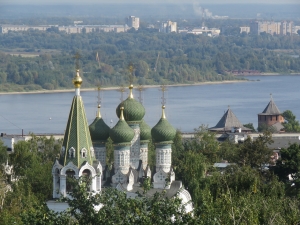
This year Russia has its first Capital of Culture. It is the city of Nizhny Novgorod. The news was leaked by Tass in the past weeks and was confirmed by one of the leading experts on European capitals of culture, Steve Green, who in his eighth report published on the site lists the capitals of culture around the world.
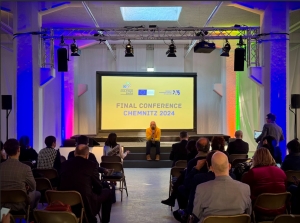
It was held in Chemnitz, European Capital of Culture 2025, the final conference of the 'CulTourData' project financed by the European Commission, within the COSME programme, to support SMEs, coordinated by Materahub with the participation of Basilicata Creativa and partners from Germany, Holland, Portugal, Spain and Slovakia.
The competition in Poland for ecoc 2029 is in full swing. After Krakow (2000) and Wroclaw (2016) in 2029 it will be the third time of a European capital of culture in Poland.Twelve cities in Poland had applied to become the European Capital of Culture 2029.
In May 2024, a choir of children and adults will sing a lullaby for the city to unprecedented music based on the heritage of the lullabies of the citizens of Burgos and Matera.
In recent years, spectacular street art has appeared in several parts of Veszprém, including the Jutasi Housing Estate, Stadion street, and the Viaduct area. Two new areas have recently been covered with paintings, so if you're curious to see the finished works, head to the Veszprém Arena and the Maxon Tunnel.
With the nomination of Bourges (France) in the past few days, the picture of the European Capitals of Culture for 2028 has closed: Budweiss (Czech Republic), Skopje (Northern Macedonia) and Bourges (France). Now all eyes are on 2029, when it will be the turn of Sweden and Poland to name the European Capital of Culture.
In the end, Bourges will be the European Capital of Culture in 2028 for France. A title it will share with Budweiss for the Czech Republic and Skopje for North Macedonia.
Online newspaper based in Matera
EcocNews is registered at the Court of Matera in the press register n. 2/2021
Editor in chief: Mariateresa Cascino. Founder and editorial director: Serafino Paternoster
via San Francesco, 1 - 75100 Matera (Italy)