





Online newspaper based in Matera
EcocNews is registered at the Court of Matera in the press register n. 2/2021
Editor in chief: Mariateresa Cascino. Founder and editorial director: Serafino Paternoster
via San Francesco, 1 - 75100 Matera (Italy)



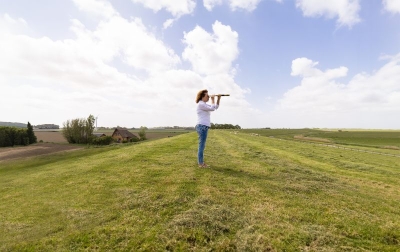
Fryslân is a region with a strong identity and a deep sense of community. Rural, northern, and proudly multilingual, it has long been a place where tradition and creativity coexist. In 2018, when Leeuwarden-Fryslân became European Capital of Culture, the region showed Europe what a small territory with a big imagination can achieve. That momentum did not fade. It evolved into Arcadia.
This is the second instalment of EcocNews’s series on the Spanish cities shortlisted to become the European Capital of Culture in 2031. Following on from Cáceres, today’s interview is with Granada. The European Commission’s evaluation panel will announce the winning city on 3 December.
From 29 September to 4 October 2026, the cross‑border film festival Tribute to a Vision / Poklon viziji returns to the shared urban space of Nova Gorica and Gorizia, a territory where borders are almost imperceptible, yet cultural diversity remains vibrant, layered, and profoundly alive.
The European Commission has recently presented a proposal to reform the European Capital of Culture (ECoC) initiative to the European Parliament and the Council of Europe, considering that the current rules will come to an end in 2033.
Today, EcocNews begins its virtual tour of the four Spanish cities on the shortlist. In alphabetical order: Cáceres, Granada, Las Palmas de Gran Canaria, Oviedo. We have asked each bid team the same five questions.
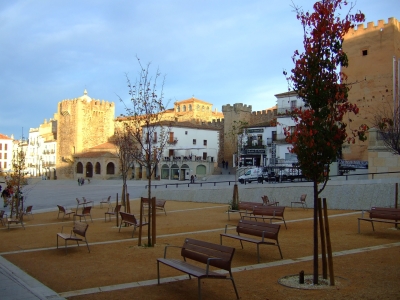
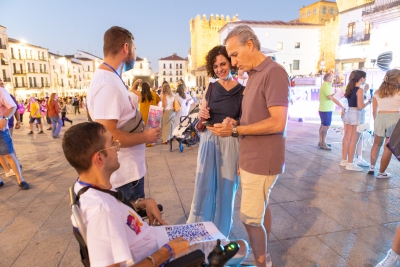
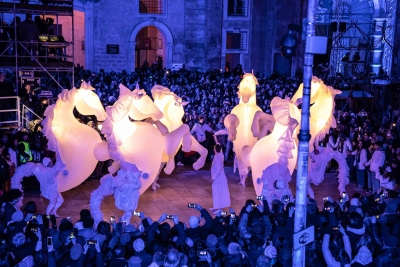
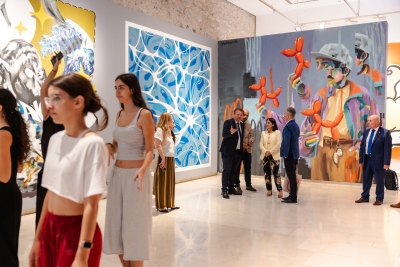
Cáceres 2031 has given a very positive assessment of its participation in Heritage Nights, which transformed the city into a major open cultural space on 11 and 12 September. The European Capital of Culture bid played an active role in a programme that recorded 50,329 visits and participations, with 40 activities and the same number of venues open to the public free of charge.
On 10 September 2026, the European Commission adopted its proposal for the new legal framework of the European Capitals of Culture Action from 2034 to 2047. The action will be negotiated with both the European Parliament and the Council. The link at the end of this news.
What happens when two island cities decide that being on the margins does not mean being far away? Las Palmas de Gran Canaria and Victoria-Għawdex share a geography, challenges and a common determination to turn their island condition into a way of connecting, creating and opening up Europe.
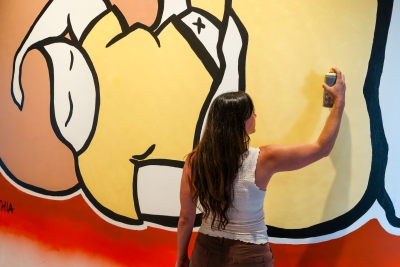
Maltese artists Jason Joe Farrugia and Cynthia Saliba transform the walls of the Castillo de Mata Museum through an artistic residency initiated by the Las Palmas de Gran Canaria 2031 European Capital of Culture candidacy. The initiative is part of REBEL WALLS. Urban Stories, one of the projects developed under ‘Geography Rebellion’.
The Cáceres 2031 Cultural Activation Office (OAC) has launched the first Cultural Creation Guide, a practical tool designed to support the development of cultural projects and connect the various stakeholders within Extremadura's creative ecosystem.
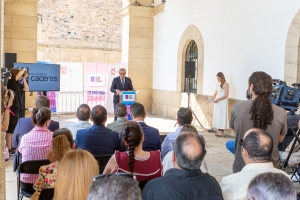
All the municipalities from across Extremadura, led by Manuel José González Andrade, President of the Federation of Municipalities and Provinces of Extremadura (FEMPEX), gathered on Tuesday at Cáceres City Hall to publicly demonstrate their unanimous support for Cáceres' bid to become European Capital of Culture 2031.
The Cáceres 2031 bid took part in the Europaeum Summer School, held at the Jagiellonian University in Kraków, where it presented its European Capital of Culture model and engaged with students and international experts to address Europe's major cultural challenges.
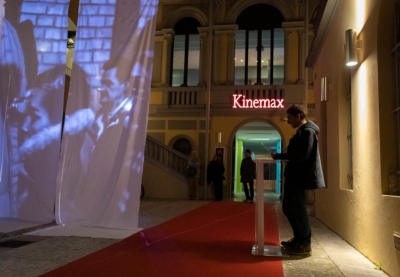
Telling reality — especially the reality at the margins — and giving space to the voices of the invisible in order to better understand the complexity of the present and anticipate future changes: this is the vocation of the Lucania Film Festival, reaffirmed even more strongly by its upcoming 27th edition.
Why every future European Capital of Culture needs a legacy plan before the title year even starts.
A contemporary perspective on the ancient world, capable of bringing back to the present day and renewing, within our own time, the original aura of works and monuments from a lost Mediterranean. An immersion in the vision of the past through powerful images, the result of a transformative photographic art.
Ksenia Shinkovskaya (Latvia), Séverine Berthias (France) and Kalin Mihov (Bulgaria) will develop artistic residencies in Extremadura within the program promoted by Cáceres' bid for European Capital of Culture
On the sidelines of the European Council some days ago in Brussels, the President of the Republic of Cyprus as the rotating Presidency of the Council of the European Union and the Presidents of the European Parliament and the European Commission signed a joint declaration entitled “Europe for Culture, Culture for Europe”. The declaration sets out their shared political commitment to protecting, promoting and supporting culture in Europe.
Nearly one hundred people participated this Sunday in the celebration of European Music Day organized by Cáceres 2031 at the Ateneo de Cáceres.
The event brought together people of all ages for a free cultural program that combined music, education, and community to bring the richness of European musical heritage closer to the public.
The day included two performances of the show "A Magical Journey Through Music," performed by the Alla Corda string quartet and presented by Cáceres-born singer-songwriter Chloé Bird. Playing the character of Greta Maleta – an expert in musical rarity – she guided the audience on a geographical and temporal journey through some of Europe's most representative musical works and traditions.
A Journey Through the Geography and History of the Continent Through a carefully curated selection of pieces, attendees traveled from the Baroque era of Johann Sebastian Bach to contemporary compositions by Max Richter, including essential composers such as Mozart, Brahms, Debussy, Bartók, and Ennio Morricone.
The program also included traditional Irish music and works that reflect the continent's cultural diversity. During the presentation, Chloé Bird championed music as a space for encounter and celebration of diversity. "Differences do not separate us; let us celebrate what is unique, let us celebrate what is different, let us celebrate what is unusual. Music is a meeting place," she emphasized.
For her part, the general coordinator of the Cáceres 2031 Consortium, Iris Jugo, emphasized the symbolic value of this date for the candidacy: "European Music Day is an opportunity to celebrate the continent's cultural heritage and remember that culture is one of the great spaces that unites people," she noted. Likewise, the Councilor for Culture of the Cáceres City Council, Jorge Suárez, highlighted that the celebration reflects one of the main objectives of the candidacy for European Capital of Culture 2031, which is to place citizens at the heart of the project and make culture a tool for collective transformation, with citizens as "the main protagonists of this process."
Both concerts were accompanied by light refreshments to encourage dialogue among attendees, as part of the "Dialogues for the Capital of Culture" series, in a friendly and participatory atmosphere that reflects the values of inclusion, citizenship, and access to culture promoted by Cáceres' bid to become the European Capital of Culture 2031. With this initiative, Cáceres 2031 continues to promote cultural activities open to all citizens, fostering participation and strengthening the connection between local culture and European values through shared experiences.
Online newspaper based in Matera
EcocNews is registered at the Court of Matera in the press register n. 2/2021
Editor in chief: Mariateresa Cascino. Founder and editorial director: Serafino Paternoster
via San Francesco, 1 - 75100 Matera (Italy)