As is often the case when a country hosts a European Capital of Culture, the event turned the spotlight not only on Nova Gorica and Gorizia, but on the whole of Slovenia. The ‘borderless’ year has revitalised the visibility of some of its most iconic natural and cultural assets, bringing back into the spotlight a heritage that unites nature, history and identity.
EcocNews, having visited the cross-border capital and observed its legacy at close quarters — that living legacy that endures beyond the official year (here) — took the opportunity to travel across Slovenia and report on some of its most significant sites: the Vintgar Gorge, with its untamed beauty; Ljubljana Castle, guardian of the capital’s memory; the Postojna Caves, a natural wonder that continues to enchant generations of visitors.
A journey that begins in a Capital of Culture and inevitably extends to the heart of a country that has made beauty and dialogue its European hallmark.
The Vintgar Gorge
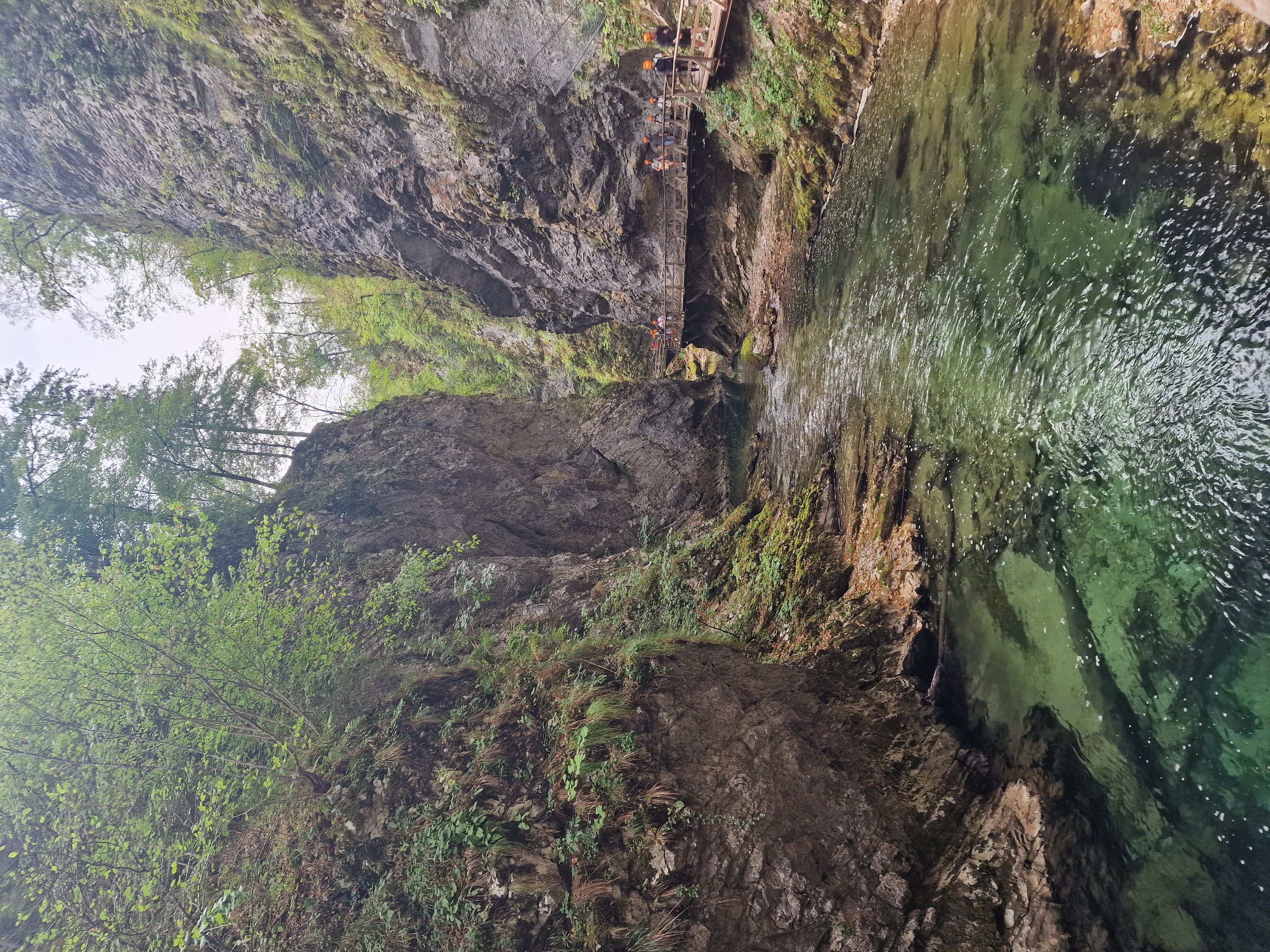
The Vintgar Gorge, just a few kilometres from Bled, is now one of Slovenia’s most iconic landmarks and has benefited greatly from the visibility generated by its status as European Capital of Culture. The canyon, carved out by the River Radovna, is a natural corridor that winds for over one and a half kilometres amongst vertical cliffs, rapids and emerald-coloured pools. The wooden walkway running the entire length of the route is the best-known feature, but in recent years Vintgar has also become a favourite destination for keen walkers. In addition to the classic trail, hiking routes connecting the canyon to the surrounding villages, such as Podhom and Zasip, have been developed, allowing visitors to explore an authentic, off-the-beaten-track rural landscape. The trails, which are well signposted and vary in difficulty, offer panoramic views of the Triglav massif and allow visitors to experience Vintgar not merely as a nature walk, but as an immersive experience of the local area. The site’s management, with a focus on sustainability, has introduced quota-based bookings and maintenance measures that preserve the fragility of the ecosystem, making the canyon a shining example of responsible tourism.
Ljubljana Castle
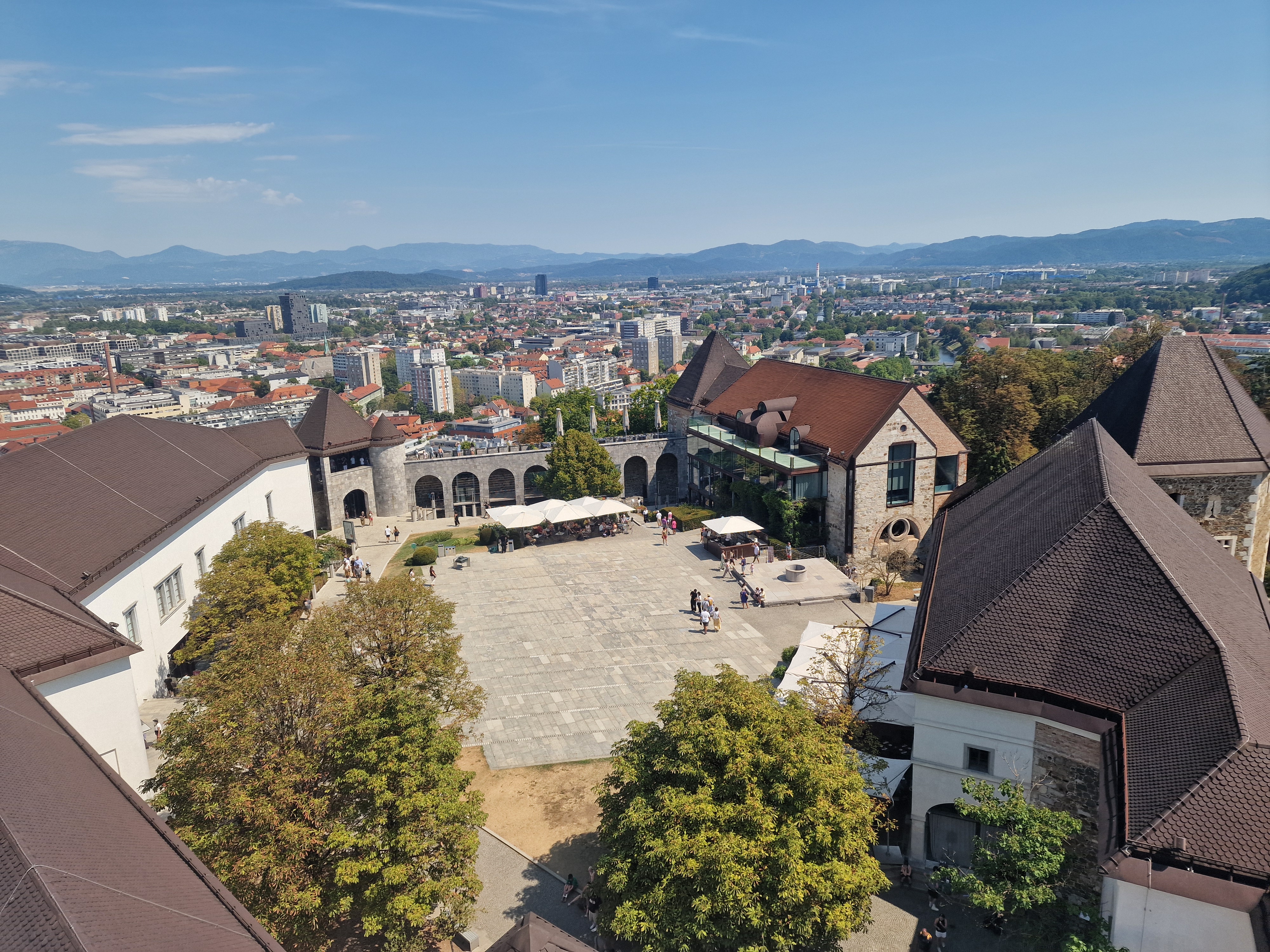
From this natural setting, we move on to the capital, Ljubljana, which in recent years has cemented its image as a dynamic and culturally vibrant European city. Ljubljana Castle, which overlooks the city from the top of the hill, is at the heart of this identity. The medieval fortress, restored and transformed into a multifunctional cultural centre, now hosts a constantly evolving programme of exhibitions. Among the exhibitions currently on display, the ‘History of Slovenia’ stands out – a permanent exhibition tracing the country’s history from Roman times to independence – as does the ‘Slovenian Puppet Exhibition’ (which we recommend visiting to satisfy the curiosity of both children and adults), dedicated to a theatrical tradition that has left a deep mark on the national imagination. These are complemented by temporary exhibitions ranging from contemporary photography to multimedia installations, often organised in collaboration with European institutions. The castle also hosts evening events, open-air film screenings and family workshops, transforming itself into a meeting place that brings together locals and visitors alike. From its panoramic terraces, the view over the red rooftops and the River Ljubljanica paints a picture of a capital city that has successfully blended historical heritage with cultural innovation.
The Postojna Caves
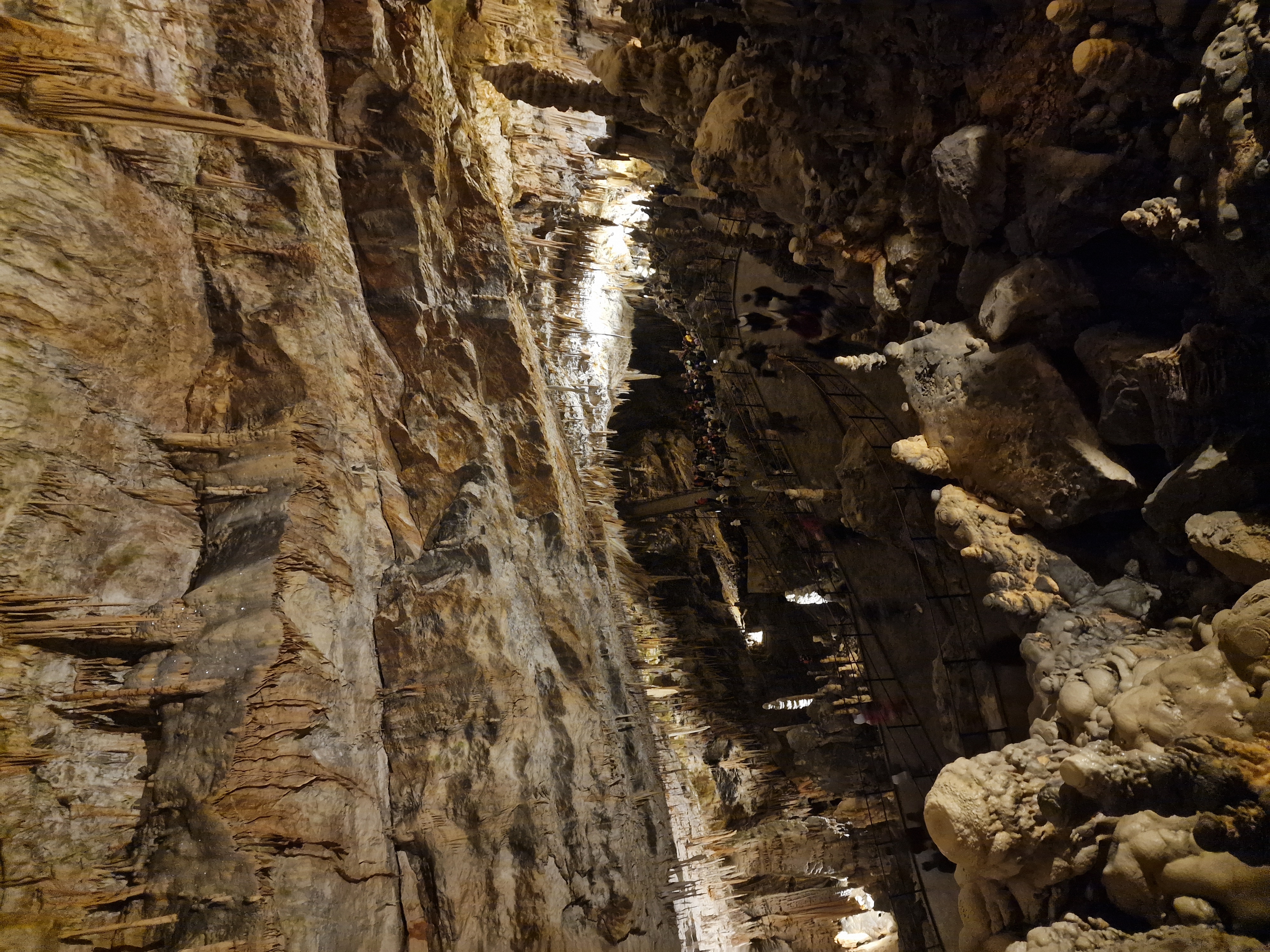
A journey through Slovenia’s heritage sites cannot but conclude with one of Europe’s most iconic sites: the Postojna Caves. Here, nature has been at work for millions of years, sculpting an underground world that seems to belong to another realm. The caves stretch for kilometres through a succession of majestic chambers, thread-like stalactites, limestone columns and hidden rivers. The tourist route, which also includes a section on a miniature train, allows visitors to immerse themselves in a mesmerising landscape, where every formation tells the story of the slow passage of geological time. Postojna is not just a natural monument: it is a scientific laboratory, a centre for research into underground biodiversity and the conservation of karst ecosystems. It is home to the famous olm, the blind amphibian that symbolises cave fauna and has helped make the caves an international hub for speleological studies. Visiting Postojna means encountering the most ancient and mysterious aspect of Slovenia, a depth that fascinates and invites reflection.
These three World Heritage sites – the Vintgar Gorge, Ljubljana Castle and the Postojna Caves – form a route that reveals the country’s cultural and natural heritage, which is, of course, far more extensive and rich.
Slovenia, thanks in part to the visibility gained through Nova Gorica–Gorizia 2025, continues to prove itself a destination capable of surprising, preserving and innovating. A place where culture is not merely an event, but a way of living in the region and sharing its story with the world.