Why did the city decide to bid for the title of European Capital of Culture?
Oviedo and Asturias believe that this is a particularly timely moment to ask ourselves what we want to do with who we are and what we have inherited, and how we want to transform it for the future.
We come from a territory with a strong cultural identity, a deeply rooted industrial and community heritage, and a remarkable capacity for creativity. At the same time, we face challenges that we share with many other European territories and that we cannot address alone: an ageing population, the departure of young people, the transformation of former industrial sites, and the need to strengthen our connections with Europe.
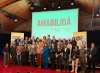
The bid proposes addressing these challenges through culture and through an idea that comes from Asturias: Amabilidá. Not as a synonym for kindness or cordiality, but as the practice of coming together, listening to one another, building relationships and being able to create things together.
In this second phase, that idea has taken a further step. It is no longer simply a way of imagining how we want to live together; it has become a way of acting, building connections and transforming our surroundings. We also believe that many of the questions we are asking ourselves in Oviedo and Asturias are deeply European questions too.
What changes do you hope to see in the community?
We hope to achieve three fundamental changes.
· The first is to broaden who takes part in culture and how they participate, not only as audiences, but also as active contributors to processes of creation and decision-making.
· The second is to improve conditions for artists and cultural professionals, while opening up the Asturian cultural ecosystem to new practices, collaborations and European networks.
· And the third is to strengthen our ability to do things together, creating new forms of collaboration between culture, education, communities, institutions and the territory.
The European Capital of Culture title lasts for one year, but these capacities should remain for much longer. We want the experience to leave behind a more engaged community, a stronger and better-connected cultural sector, and a more open and collaborative understanding of culture.
What are the three key words of your cultural programme?
There are three ideas that sum up quite well how we understand the cultural programme and, above all, how we want to develop it: journey, listening and fermentation. All three are part of the same process.
Journey, because we do not see the Capital of Culture as a destination, but as a path that is built step by step, in dialogue with the territory, its communities and time itself.
Listening, because walking that path means paying attention to what and whom we encounter along the way: other people, generations, languages, landscapes, memories and cultures. Listening also means accepting that these encounters may transform us. It is the basis for ensuring that projects are not imposed, but emerge through dialogue.
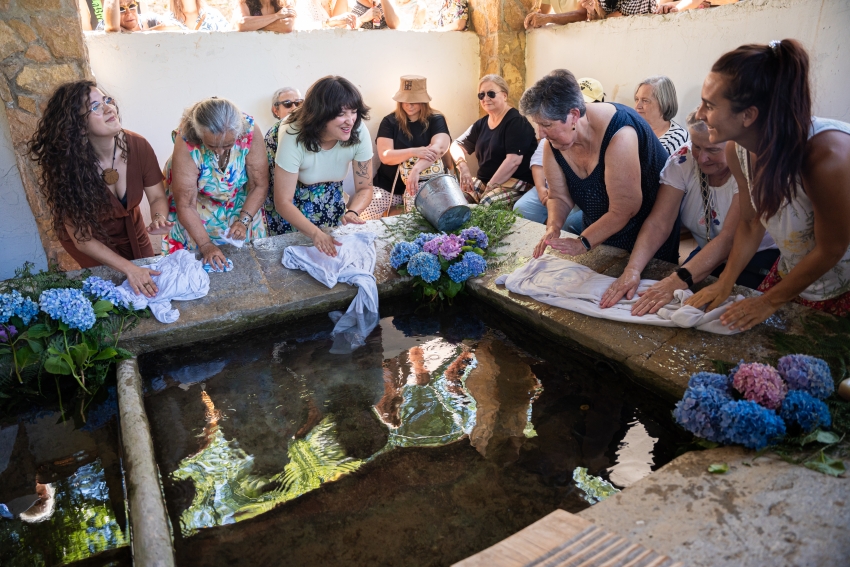
Fermentation, because a living culture never remains unchanged. It connects, is passed on and evolves. The programme starts from who we are and what we have inherited, brings it into contact with other perspectives, generations, forms of knowledge and cultures, and explores what might emerge from those encounters.
The three ideas are interconnected: we walk, we listen, and we allow something new to emerge from those encounters.
What are the main activities involving citizen participation?
For us, participation is not one specific activity within the programme, but a way of building the entire bid, and it takes many different forms.
Sentémonos, for example, takes the bid into public squares and neighbourhoods to speak directly with residents, answer questions and gather ideas. Puxa el Barrio develops artistic residencies in community spaces, working with local residents through shared creative processes.
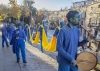
In education, the Marcha por la Amabilidá brought together more than 2,500 pupils from over 30 schools in Oviedo. In the weeks leading up to the event, they worked alongside artists to explore the meaning of Amabilidá and its connection with European values such as coexistence, equality, democracy and sustainability. The process culminated in a march through the streets of the city, where they shared banners, music, choreography and other creations developed in their schools.
That work now continues through Pequeñas Acciones por la Amabilidá, a programme that connects artists with schools to develop mediation and co-creation projects. This is complemented by participatory working sessions in which residents and cultural stakeholders have contributed to the development of proposals.
Participation is also embedded in the development of the cultural programme itself. We have worked with curators and professionals who are closely connected to the territory, bringing different perspectives and areas of knowledge into the process.
Rather than seeing participation as an occasional activity, we understand it as a way of working that should accompany the entire bid process. This involvement will also continue through the volunteering programme we are currently designing, so that residents can play an active role in the development of the Capital of Culture and become part of its projects, activities and processes.
Ultimately, we want to move from participating in culture to having the capacity to create culture together.
What do you want to remain after the European Capital of Culture year?
For us, remaining does not mean staying the same. Culture remains alive when it is able to be passed on, connect with others and transform.
That is why, after 2031, what we most want to remain are capacities: a stronger, more balanced and resilient cultural ecosystem; better conditions for artists and cultural professionals; lasting relationships with other European cities and organisations; new forms of participation and collaboration; former industrial spaces brought back into use for cultural purposes; and greater confidence in our own cultural potential.
We want to consolidate new ways of designing and managing cultural policies that are more participatory and collaborative, while strengthening the connections between citizens, artists, institutions, businesses and international networks.
We also want to increase the territory’s capacity to develop European projects and to work on a long-term basis with other cities and organisations, so that these relationships do not end when the Capital of Culture year is over.
There will also be a physical legacy. The recovery of former industrial infrastructure for new cultural uses can respond to one of the needs identified during the bidding process, while at the same time connecting heritage, memory and contemporary creation.
And there is a less tangible, but equally important legacy: strengthening cultural self-confidence. Being able to recognise and value what we have, share it with Europe and, at the same time, open ourselves up to new perspectives without losing what makes us distinctive..