We interviewed Austin Camilleri, Artistic Director of the Bid Book, just after the European panel of experts recommended Victoria as the European Capital of Culture 2031.
What happens when a city of a small island becomes a European Capital of Culture?
European cultural policy is often designed from mainland centres, even though island territories make some of the continent’s most urgent questions unusually visible. Distance, dependence, migration, demographic change, pressure on land, seasonal economies and climate exposure are daily realities on islands. They are also European realities.
What is the claim of Victoria 2031 and Gozo to Europe?
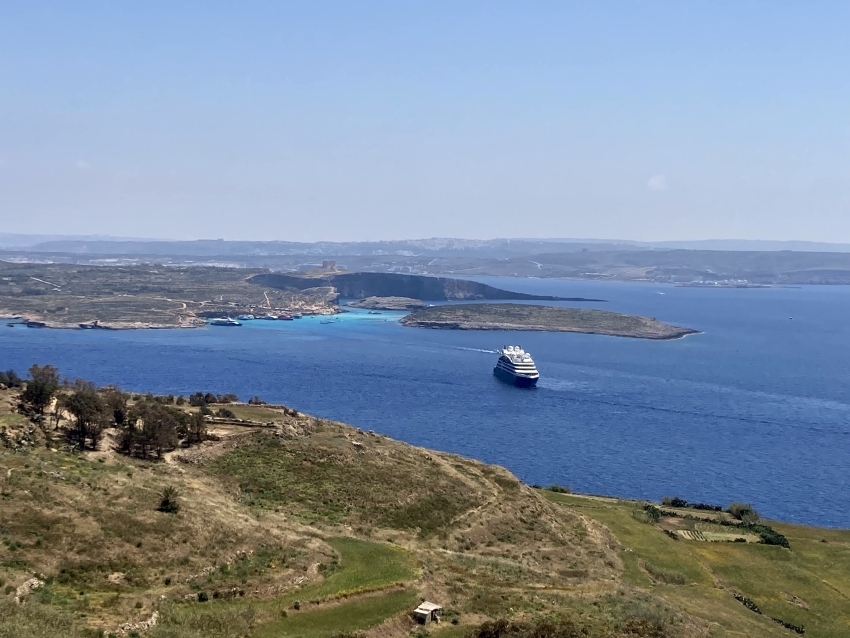
Victoria’s designation as European Capital of Culture 2031 gives Gozo (Malta) a platform from which to examine those conditions through artistic practice. Our programme begins with a concept, An Island of Islands, that treats the island neither as an isolated edge nor as a single, unified identity. It understands Victoria and Gozo as an archipelago of localities and communities, connected internally and to a wider European archipelago through movement, exchange and mutual responsibility.
This matters at a moment when the EU Strategy for Islands recognises the specific realities of roughly 17 million people living on more than 4,000 islands across 16 Member States. Culture can add something essential to that policy conversation. It can create situations in which knowledge is exchanged, differences are negotiated, relationships are tested and possible futures are made tangible.
Your programme is composed as a “European Archipelago”. Can you detail this innovative approach?
Victoria31Għawdex therefore positions the city as an Islands Laboratory for Relational Practices. The phrase describes a working method rather than a branding exercise. Artists, communities and institutions will use Victoria and Gozo to explore how island territories can cooperate, how public life can include more voices, how heritage can remain active, and how cultural development can respond to ecological and social pressures without erasing local character.
The artistic programme is an invitation to navigate this archipelago. It is organised through six thematic islands and two currents. The islands address ecology, care, storytelling, civic voice, play and future-making. Arkivju Ħaj | A Living Archive connects them through shared memory and knowledge. Ħjut Ħajjin | Living Threads builds skills, professional mobility, organisational confidence and the working methods required to sustain the programme. App31 will provide the digital infrastructure through which people can navigate, participate and contribute across physical and digital spaces.
In that framework/European archipelago, how will the creative process be developed?
European cooperation is built into the making of the work. It is expressed through co-commissions, reciprocal residencies, shared research, touring, professional exchange and joint presentation. The purpose is not to assemble an international guest list. Each relationship should change what becomes artistically possible in Gozo and create routes through which work developed here can circulate elsewhere.
The programme also creates space for European solidarity and shared learning. Partnerships with cultural organisations connect literature, libraries, care and practices developed in response to war and displacement. Work with healthcare partners in Gozo places artistic practice within a wider conversation about mental health and the environments of care. Through Islands dedicated projects, Gozo will convene a heritage-climate network that joins small museums, researchers, artists and island communities around water, adaptation and public memory.
Reciprocity also means recognising the cultural value generated by cities that do not receive the European Capital of Culture title. Xejn Ma Jintilef | Not All Is Lost will invite former candidate cities to share or adapt unrealised projects in Gozo. Bidding produces research, partnerships and civic imagination that should not disappear with a jury decision. The project proposes a transferable way of keeping that work in circulation.
These relationships will contribute to a European Islands Network connecting candidate cities, designated Capitals of Culture, former title-holders and other island territories. Its purpose is both artistic and civic: joint projects, professional and community exchange, policy dialogue and a stronger collective voice for island communities. Initial partnership gathers colleagues from the islands of Cyprus, Gran Canaria, Azores, Arran and Gozo, with the network intended to widen from 2027.
Which values are the compass of the cultural programme?
Our guiding values are Slowness, Care and Courage. In operational terms, slowness acknowledges the pace of an island and the value of time. It builds from the very first 2026 pilots projects into a continuous and long-term programme cycle, allowing projects to move through research, experimentation, sedimentation, participation, production and evaluation. Care means fair working relationships, accessibility, environmental responsibility and attention to the pressures cultural activity can place on residents and sites. Courage asks us to protect artistic freedom and make room for sensitive subjects, to be open to difference, uncertainty and transformation.
Victoria31Għawdex will contribute to Europe by remaining precise about island life while opening that experience to exchange. The title gives us the opportunity to make Gozo a meeting point where islands can create together, learn from one another and bring their perspectives more forcefully into Europe’s cultural future. An island of islands.
More info & Bid Book here.