


Online newspaper based in Matera
EcocNews is registered at the Court of Matera in the press register n. 2/2021
Editor in chief: Mariateresa Cascino. Founder and editorial director: Serafino Paternoster
via San Francesco, 1 - 75100 Matera (Italy)



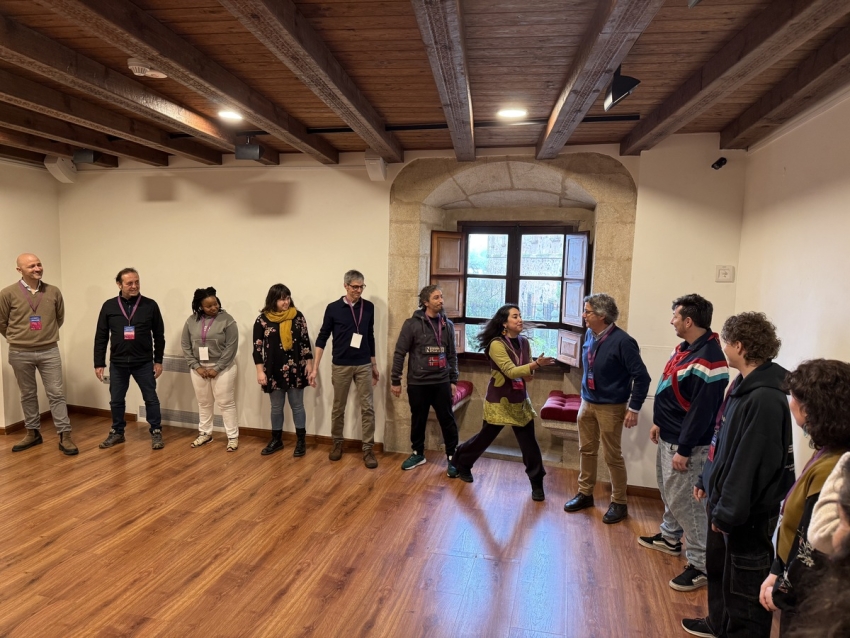 Cáceres 2031 activity (Círculo Transformador).
Photo by Caceres 2031
Cáceres 2031 Expands its Council of Elders with international experts in culture, sustainability and citizen participation. The bid strengthens this advisory body with professionals from different disciplines, retaining the members involved in the first bid book while welcoming new internationally renowned figures. The Council brings together experts in artistic creation, heritage, international cooperation, audience development and diversity to enrich the cultural vision of Transcultura
The Cáceres 2031 European Capital of Culture bid has expanded its Council of Elders, an advisory body made up of professionals from different disciplines who contribute their knowledge and experience to the development of the project. The new composition retains the members who were involved in preparing the first bid book while welcoming new experts, strengthening its international dimension and bringing together diverse perspectives on Europe's cultural challenges.
The Council includes internationally renowned figures such as Ferran Adrià, a world-renowned figure in gastronomy; Manuel Borja-Villel, art historian and curator; Xandra Falcó, Executive President of Círculo Fortuny; Andoni Luis Aduriz, chef and culinary communicator; Telmo Rodríguez, winemaker and winegrower; Valentín Laperche de Crozals, landscape designer; and Emilio Tuñón, architect. Their professional backgrounds bring a vision of culture to the project that connects contemporary creativity with gastronomy, landscape, architecture and heritage.
The Council's European and international dimension is also reflected in the participation of Simon Sharkey, specialising in participatory culture and art; Pamela Calsow, in international management and audience development; Maggie Lauer, in European Union international affairs; and Mané Cisneros, whose work focuses on developing international projects in rural areas. These experts help connect Cáceres 2031 with cultural experiences from other territories and new approaches to cooperation and participation.
They are joined by Lida Lelouda, specialising in evaluation; Grigri Project, in evaluation and participation; Luisa Santos, whose work focuses on collective culture; and Safira Antzus, whose experience includes working with refugees and developing artistic projects. The Council also includes Mahir Namur, who brings a perspective centred on care and wellbeing, and Jo Leys, specialising in citizen participation.
This diversity of international experience enriches the bid with knowledge and methodologies from different contexts, encouraging the exchange of ideas and the development of connections with European cultural professionals and organisations. This approach reflects Cáceres 2031's commitment to placing cooperation and shared learning at the heart of its project.
A cross-disciplinary perspective on culture and the territory
The composition of the Council of Elders reflects a broad understanding of culture, encompassing disciplines related to sustainable development, inclusion and social transformation.
Contributors in this area include Antonio Armero, specialising in sustainability; Jesús García, in sustainable tourism; and Javier Sellers, whose work focuses on heritage. Isabel Góngora brings her expertise in disability, while Amparo Moroño works in the fields of women's initiatives and rural projects.
The Council also includes Antonio Moral Rubio, specialising in music management; Alexander Calsow, in neurogastronomy; Cristóbal de Manuel, in design and photography; and Esteban Valero and Julio Cepeda/Nina Vagina, whose work focuses on diversity.
The involvement of these professionals brings knowledge to the development of the bid that extends beyond traditional artistic disciplines. From sustainable tourism and accessibility to citizen participation and cultural projects in rural areas, the Council offers different perspectives on the role culture can play in the future of Cáceres and Extremadura.
Carlos Gago, Head of Programming at Cáceres 2031, described the Council of Sages as "a group of experts who bring a critical perspective from their respective fields and help guide the bid." Gago also expressed particular gratitude to the Atrio Cáceres Foundation for its collaboration, "which has very generously put us in touch with prominent figures from the worlds of culture, the arts and other fields of knowledge."
A space for shared knowledge in support of Transcultura
The expansion of the Council of Sages forms part of the ongoing development of Transcultura, the concept underpinning the Cáceres 2031 bid, which proposes an approach to culture based on listening, connecting and transforming.
The advisory body provides a space for collective reflection, bringing together the experience of professionals from different fields with the needs and aspirations of the territory. Its multidisciplinary and international nature helps enrich the cultural project and establish connections between Cáceres and other European contexts.
By retaining its original members and welcoming new voices, Cáceres 2031 strengthens its commitment to an open and collaborative bid, one that embraces knowledge and cooperation and is capable of generating learning opportunities and lasting relationships beyond 2031.
Online newspaper based in Matera
EcocNews is registered at the Court of Matera in the press register n. 2/2021
Editor in chief: Mariateresa Cascino. Founder and editorial director: Serafino Paternoster
via San Francesco, 1 - 75100 Matera (Italy)