
Online newspaper based in Matera
EcocNews is registered at the Court of Matera in the press register n. 2/2021
Editor in chief: Mariateresa Cascino. Founder and editorial director: Serafino Paternoster
via San Francesco, 1 - 75100 Matera (Italy)



 Trencin 2026, the opening ceremony
Photo by Trencin 2026
Trencin 2026, the opening ceremony
Photo by Trencin 2026
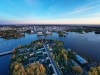
Trenčín kicked off its year as European Capital of Culture 2026 with the biggest cultural event in its history.
Trenčín was transformed into a vibrant cultural centre of European significance. Over the course of three days, the Opening Weekend of Trenčín 2026 – European Capital of Culture welcomed tens of thousands of visitors and offered more than one hundred cultural, community, and artistic events across the city centre and its neighbourhoods. Thousands of performers from dozens of countries, together with hundreds of volunteers and representatives of local communities, took part in the programme. As the largest cultural event in the city’s modern history, the opening weekend symbolically launched the year-long programme of Trenčín 2026 – European Capital of Culture.
From Friday to Sunday, the streets, squares, galleries, churches, nightclubs, and public spaces of Trenčín became venues for art, unexpected encounters, and shared experiences. The opening weekend presented more than one hundred cultural, community, and artistic events across the city and its neighbourhoods, highlighting the richness and diversity of the local cultural scene alongside contributions from international guests.
The programme unfolded across three main stages and dozens of additional locations throughout the city. Visitors experienced a wide spectrum of cultural events, ranging from theatre, music, and dance performances to concerts, exhibitions, fashion shows, and shared readings in Trenčín’s cafés. Emerging talents appeared alongside established groups, each given space to shine. The entire city moved to the rhythm of a masked parade, gradually joined by folk ensembles, children, musicians, and actors.
“We wanted everyone to find something in the programme, whether it was a large-scale evening performance or a small, intimate experience in a neighbourhood setting. The opening weekend showed what a city can become when it opens itself to people, ideas, curiosity, and the world,” said Stanislav Krajči, Director of the Trenčín – European Capital of Culture project.
Artists from more than twenty countries across Europe and beyond came to Trenčín, a city of approximately 55,000 inhabitants. Participants included representatives from Czechia, Poland, Portugal, Denmark, Finland, Italy, Spain, Germany, Norway, and France, as well as Japan, Brazil, and Turkey. Alongside these international contributors, local artists, associations, schools, and cultural institutions played a significant role in the programme.
MANIFEST TRENČÍN 2026 AS A SYMBOLIC HIGHLIGHT
The highlight of Saturday’s programme was the evening gala programme, Manifest Trenčín 2026, at Mírové námestie (Peace Square). This multimedia production brought together imagery, music, dance, and storytelling to reflect the city and the wider region, paying tribute to their identity, cultural heritage, and the personalities who shaped their development.
“The Manifest was not just a festive show, but an expression of what Trenčín is and what it wants to become: an open, self-confident city that brings together tradition and the present, the local and the international,” said Lumír Mati, Chief Dramaturge of the Opening Weekend.
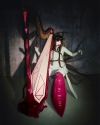
The main stage featured performances by Jana Kirschner, Štefan Štec, the Slovak Armed Forces Military Band, the legendary Trenčín band Bez ladu a skladu, and the Spanish artistic collective Sacude, among others.
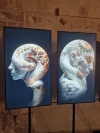
The city streets came alive with the light installations Zažni mesto (Light Up the City), which transformed public spaces with light and art over the three evenings. Contemporary art was showcased not only in the traditional exhibition spaces of the Miloš Alexander Bazovský Gallery, where visitors could explore the work of Stano Filko, one of Slovakia’s most important artists of the 20th and 21st centuries, but also through three exhibitions by artists from Turkey, Portugal, and Japan, bringing contemporary art into the historic setting of Trenčín Castle.
Culture and art extended into unconventional spaces, including the city underpass and the winter stadium. The Opening Weekend also marked the launch of LUMó Hub, a new city-centre venue dedicated to sustainable fashion. Throughout the year, LUMó Hub will bring Trenčín’s fashion legacy to life through activities and programmes focused on sustainability.
COMMUNITIES AND NEIGHBOURHOODS AT THE HEART OF THE OPENING
The craftsmanship and traditions of Trenčín’s textile industry were reflected in contributions by women of neighbouring communities hand-knitting hats, scarves, and gloves. These were distributed free of charge to visitors during the Opening Weekend, offering a heartfelt gesture of time, care, and artisanal skill.
“Even a simple gathering to knit or share a meal is a cultural event for us. It is precisely in these moments that relationships and a sense of belonging are formed, and these are the connections we aim to nurture through the Trenčín 2026 project,” said Lenka Abaffyová, Coordinator of Community Activities.
Community projects and neighbourhood activities played a central role in the Opening Weekend, providing spaces for communal breakfasts and evening gatherings around shared tables. Another highlight was the Festival of Local Flavours, offering a selection of local products alongside a unique experience: the presentation of the ‘Trenčín recipe,’ a dish inspired by the flavours and memories that evoked the spirit of the city.
VOLUNTEERS – THE FACE OF THE TRENČÍN 2026 PROJECT
Hundreds of volunteers helped to ensure the smooth running of the Opening Weekend. They assisted with organising the programme, guiding visitors, providing information, managing installations, supporting technical needs, and staffing the press centre.
“Volunteers are the heart of the entire project. They are the first people visitors encounter, and play a key role in creating the welcoming and open atmosphere we aim to offer as the European Capital of Culture,” said Stanislava Minárik, Coordinator of the Volunteer Programme.
A JOINT PROJECT OF THE CITY, THE REGION AND EUROPE
The Opening Weekend highlighted the extraordinary significance of the Trenčín 2026 project for both the city and the wider region. “Trenčín showed that it could organise an event of European scale while engaging residents across generations. We see the European Capital of Culture not as a one-off event, but as a long-term investment in the city’s quality of life,” said Richard Rybníček, Mayor of Trenčín.
Jaroslav Baška, President of the Trenčín Self-Governing Region, emphasized the project’s regional impact: “Trenčín 2026 brings not only culture to the region, but also new impetus for tourism, education, and collaboration. The Opening Weekend sent a clear signal that the region is ready to take part in the European cultural dialogue.”
Online newspaper based in Matera
EcocNews is registered at the Court of Matera in the press register n. 2/2021
Editor in chief: Mariateresa Cascino. Founder and editorial director: Serafino Paternoster
via San Francesco, 1 - 75100 Matera (Italy)