


Online newspaper based in Matera
EcocNews is registered at the Court of Matera in the press register n. 2/2021
Editor in chief: Mariateresa Cascino. Founder and editorial director: Serafino Paternoster
via San Francesco, 1 - 75100 Matera (Italy)



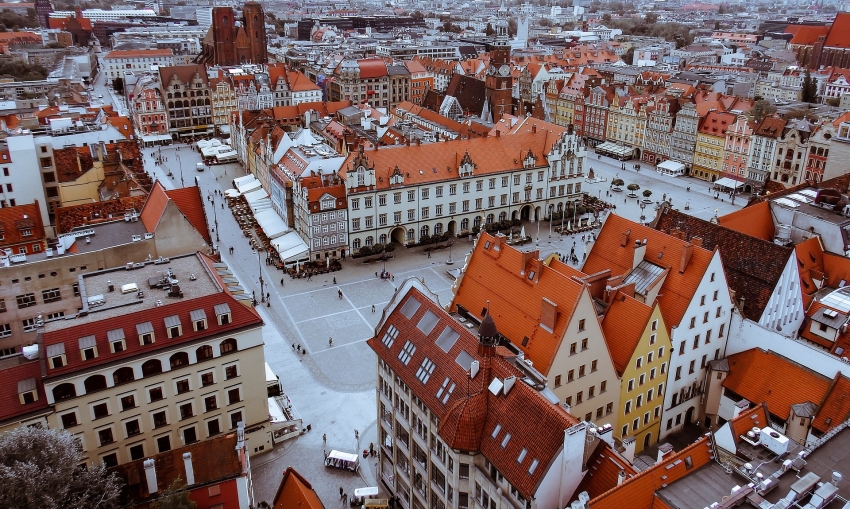 Wroclaw 2016
Photo by Pexel
Wroclaw 2016
Photo by Pexel
Having seen which Swedish cities are preparing to apply to become European Capital of Culture in 2029, we now see what the situation is in Poland, the other state that, together with Sweden, will have to nominate the ecoc. For Poland the deadline for submitting an application is September 2023.
Until September 15 this year must submit an application (in English) to the competition of the Ministry of Culture and National Heritage. The European Capital of Culture 2029 will be announced at the turn of 2024 and 2025.
One of the first cities to indicate its candidature for 2029 is Katowice, which immediately formed an alliance with the city of Sosnowiec.
Katowice tried for the title of European Capital of Culture in 2016. It did not work then and Wroclaw won, but a lot has changed since then. Among other things, the Katowice Cultural Zone has been established with the beautiful home of the Polish National Radio Symphony Orchestra.Last March, in the Zagłębie Theatre in Sosnowiec, the mayors of Katowice and Sosnowiec, the vice-presidents of the GZM Metropolis and the directors of the region's cultural units met to talk about the efforts to obtain the title of European Capital of Culture 2029 for Katowice, and indeed for the entire Upper Silesian-Zagłębie Metropolis.The Metropolis GZM is a metropolitan unit composed of 41 contiguous municipalities in the Silesian Voivodeship of Poland.
“We need culture to change our cities. The metropolitan, Zagłębie-Górnośląskie efforts to obtain the title of the European Capital of Culture is a process that will unite us and will show that together we can do something for our residents. Katowice is a leader in these efforts, but also a support. The city that will receive this title must be indicated, but we are applying for the title together, as a Metropolis, and thanks to this we take advantage of our cultural diversity” sayd the mayor of Katowice, Marcin Krupa (Read here).
Another city that is definitely in the competition and has already structured its candidature as seen on the website here is Kołobrzeg.
Kołobrzeg is the third most visited city in Poland after Warsaw and Krakow. “We are hospitable by nature and want the European Capital of Culture 2029 programme to be co-created by artists, activists and animators not only from Kołobrzeg, but also from: West Pomerania, Poland and Europe, the cities that have already been capitals of culture, those that are applying and those that decided not to apply to become an ECC. We look forward to seeing your energy. Submit your idea and design a future with us!
Our efforts are guided by the idea of Re:Generation covering eight areas - identity, nature, city, community, intergenerational dialogue, body, education and culture. By engaging artistic sensibility, intuition and imagination, we want to get a sense of the issues faced by cities like Kołobrzeg and stimulate the pursuit of sustainable and effective solutions to release streams of urban energy. Looking for sustainable tools to revitalise tributaries of the city's watersheds, currently stagnant, dispersed or blocked, we wish to stimulate Kołobrzeg’s life year-round" (read here).
The other city in the competition is Rzeszów. Until July 31 residents of Rzeszów can fill out a survey on the city's efforts to be awarded the title of European Capital of Culture in 2029.
The city of Rzeszów has created a special website dedicated to the efforts to grant it the title of ECoC 2029. The city already has its first ambassadors : Justyna Steczkowska, Ralph Kaminski, Ukrainian writer and poet Oksana Zabużko, pianist of the young generation Eryk Koszela, musician Bartłomiej "Eskaubei" Skubisz, painters Anna and Leszek Kuchniak, poet Krystyna Lenkowska and writers Magdalena Louis and Magda You'll nibble.
Before submitting the application by mid-September, the city wants to know the opinions of residents whether Rzeszów has a chance for the title of ECC 2029. There is a survey on the website. The city asks residents which of the current cultural events in Rzeszów they value the most.
“We want to know what the residents expect, what they would like to see, what they would like to participate in - says Marzena Kłeczek-Krawiec, spokesperson for the mayor of Rzeszów”. The task of the survey is also to actually involve residents in the organization of events that would take place in 2029.
“Perhaps someone has an interesting idea and a vision for its implementation. Maybe he hasn't had a chance to realize his ideas yet? Maybe he needs helpers? – says Kłeczek-Krawiec. It ensures that the city is open to all ideasm (The website).
For the city of Kielce the project's image campaign is launched on January. The minimalist logo in black and white refers to i.a. to flint, gołobor boulders and a gear wheel, which is to emphasize the industrial traditions of their region.
The start of Kielce and coalition partners: Ostrowiec Świętokrzyski, Sandomierz and Starachowice in the race for the title of European Capital of Culture 2029 results from the conviction about the importance of the material and intangible cultural heritage of the city, the Świętokrzyskie region, its European dimension, but also the unique conditions in which it developed, i.e. in close contact with animate and inanimate nature.
Preparations for winning the ECoC title began almost a year ago.
“In recent months, we have met at Small Congresses of Culture of Kielce and the Świętokrzyskie Region. Their goal was primarily to integrate the cultural and artistic environment and to activate them in terms of building a coherent cultural policy of the city and the region. As a result, a broad coalition of many local governments was formed. Now we are starting the image campaign. Soon, the prepared logo will be posted on all websites of municipal institutions and on materials promoting events in Kielce's cultural institutions”, informs Marcin Chłodnicki, Deputy Mayor of Kielce.
At that moment, Ostrowiec Świętokrzyski, Sandomierz and Starachowice declared their support.
The logo uses a gem of Polish typography - Antykwa by Adam Półtawski, one of the most important characters in the history of Polish graphic design and printing (Read here).
Lublin is applying for the title of European Capital of Culture 2029 under the motto Re:union.
The first application will present the city’s creative potential. The experience gained during the implementation of the European Youth Capital Lublin 2023 program will be a valuable asset in the work on the application at this stage. In May this year a unanimous vote by the councilors of the Lublin City Council accounced Lublin's candidature for the title of the European Capital of Culture 2029. The next stage is the preparation of the application. Residents of the city and the region, artists, animators, informal groups, non-governmental organizations, cultural institutions and companies from the creative sector can join the process of creating the Lublin application. A special form has been prepared for submitting projects and ideas (Read here).
Bielsko-Biała, the city of weaves is a creative meeting place for people and ideas. Where they interact, there is an invigorating movement that develops they.
Two dominant motifs appear in the unique multicolored pattern: the history of two once separate cities intertwined with the winding thread of the Biała River. Something connects them. It is a story that is woven from the energy of merchants, craftsmen and engineers. In the pulsating rhythm of history and social change, the dialogue of different cultures echoes. Experiences and emotions are intertwined. Constant movement interferes with the calmness of the unchanging mountain nature.
“We weave new threads of the urban story. Together, we are looking for a balance that will allow us to take care of our well-being and our natural heritage. We focus on the education of tomorrow and cooperation as a transfer of knowledge”. Welcome to the city of weaves. (The website).
In recent months it has been announced that Toruń will compete for the ECC title in 2029. Torun, like some other cities now in the running, had already participated in the competition to become European Capital of Culture in the previous round in 2016.
In particular, it was among the first Polish cities to apply for 2016 because it announced its goal in 2006, ten years earlier. After a 13-year hiatus, Toruń returns to the arena to compete with other cities in Poland. The stakes are high. However, the most important thing in this fight for prestigious European laurels will be the conclusions Toruń has drawn from the previous battle (Read here).
Jastrzębie-Zdrój is unique in its history and constant transformation. The Silesian spa pearl, a place known throughout Europe, has transformed into a flourishing industrial centre and now returns to its pre-war traditions: tourism and culture. The strikes and the Jastrzębie Agreement of 3 September 1980, together with December 1970 and August 1980, were the driving forces behind the political changes of 1989.
“Your extraordinary energy and invention have a huge impact on the script of the programme we will implement together in 2029. The office of the European Capital of Culture 2029 is waiting for you in Masnówka! We would love to hear your ideas for our city" - officials invite. "We give you a space where we want to meet your dreams about Jastrzębie-Zdrój 2029. Every day from 8 a.m. to 7 p.m. in Masnówka (section no. 2 of the Municipal Public Library) you can tell us your ideas for the city” (Read here).
Pszczyna, another Silesian city, will compete for the title of European Capital of Culture 2029.
Exactly one month ago, a meeting of representatives of local artistic circles was held at the Pszczyna town hall, where the following topics were discussed: on ECoC. There was a proposal that Pszczyna apply for the title: a letter of intent was even signed in this matter. From the hands of local artists, the document was sent to the councillors' benches, who were to make the final decision.
On Thursday, 20 April, the Pszczyna City Council adopted a resolution of intent for Pszczyna to participate in the competition for the title of European Capital of Culture 2029. The next step is to prepare a concept and an application (Read here)

Ecocnews Founder, Journalist, repentant jazz guitarist, music critic and film lover.
Online newspaper based in Matera
EcocNews is registered at the Court of Matera in the press register n. 2/2021
Editor in chief: Mariateresa Cascino. Founder and editorial director: Serafino Paternoster
via San Francesco, 1 - 75100 Matera (Italy)