




Online newspaper based in Matera
EcocNews is registered at the Court of Matera in the press register n. 2/2021
Editor in chief: Mariateresa Cascino. Founder and editorial director: Serafino Paternoster
via San Francesco, 1 - 75100 Matera (Italy)



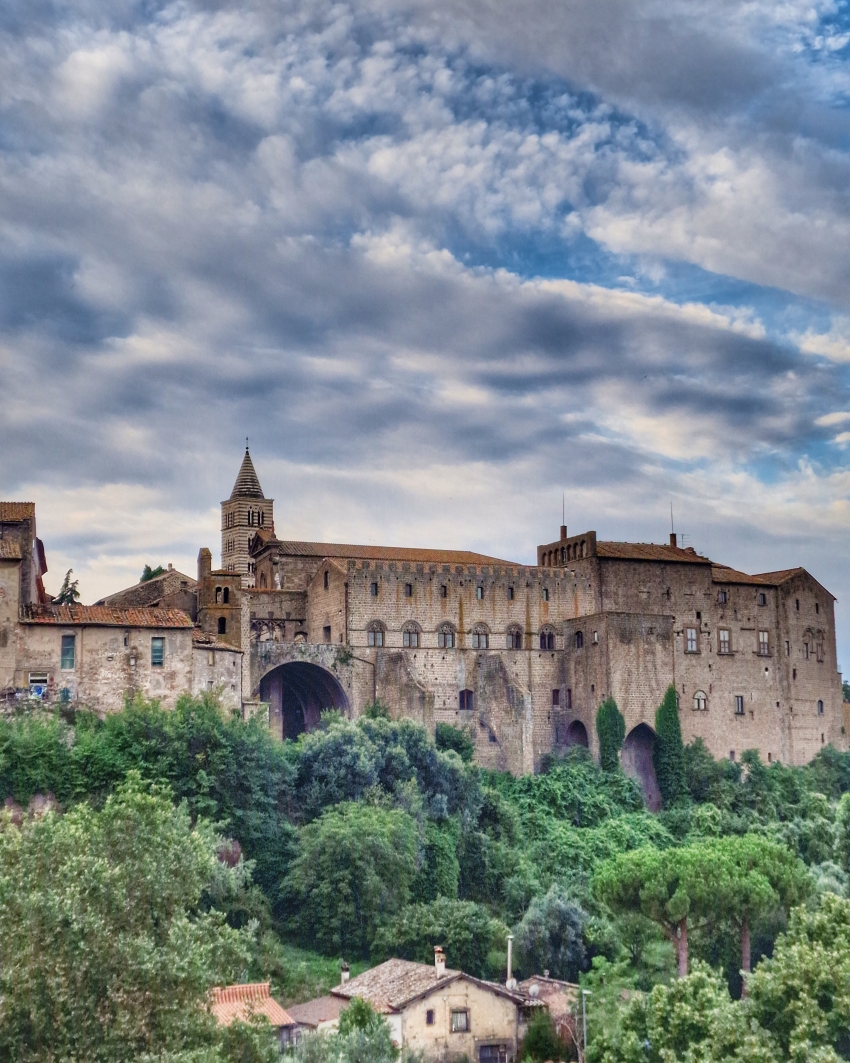 Viterbo
Photo by Arnaldo Rossi
Viterbo
Photo by Arnaldo Rossi
After Matera 2019, Italy will once again be called upon in 2033 to designate the European Capital of Culture, which will share the title with one of the Dutch cities. These will be the last capitals selected under the current cycle’s rules. Starting in 2034, a new cycle will begin based on the updated regulations proposed by the European Commission, which are expected to be evaluated by the European Parliament and the Council of Europe around mid 2027.
Since 2014, the year Matera was selected, the world has changed dramatically. Those years in which as many as 21 Italian cities applied for this ambitious title now feel very distant. A quiet alarm seems to be spreading beneath the surface around the European Capital of Culture competition. In Sweden, only two cities applied for 2029; in Malta, only two for 2031; in Denmark, just two out of the six cities that had initially expressed interest for 2032. And only a handful of Bulgarian cities have stepped forward for 2032. Not to mention the very few candidate cities from countries not yet part of the EU, such as North Macedonia or Montenegro. What is happening, beyond the small size of countries like Malta?
We will explore this in the coming weeks, but the debate is open, and we at EcocNews are ready to host it.
And in Italy? At the moment, only six cities appear to have decided to apply, though at different levels of operational readiness: Turin, Viterbo and Tuscia, Syracuse, Norcia – Civitas Appenninica, Piacenza, and Trieste. Others may join in the coming weeks.
Today we focus on Viterbo, presenting an article by Maria Chiara Giovannelli, Senior Legal Counsel | Cultural Projects & EU Affairs, PhD candidate for Viterbo ECoC2033.
We look forward to contributions from other cities to understand how they are organizing their candidacies.
In the meantime, happy reading.
Viterbo 2033: what citizens think of their city’s ECoC readiness
Is Viterbo ready to be a European Capital of Culture (ECoC) in 2033? According to the citizens, the answer is: not yet, but Viterbo knows where to work. A new study, based on 86 indicators assessed during the co-design laboratories of Viterbo’s ECoC 2033 candidacy, shows a city rich in heritage, landscape and a positive image, but held back by poor transport links, limited accommodation, a thin offer for young people and weak citizen involvement. Viterbo began its journey towards ECoC 2033 with a unanimous City Council resolution in February 2023. From the outset the city has prioritized governance and participation to determine a long-term cultural and urban strategy, and to foster citizen engagement.
Learning from the governance weaknesses identified in past ECoC experiences by the European Commission, Viterbo chose a multi-level structure to ensure institutional stability. The Municipality actively engaged the major stakeholders and signed the Memorandum of Understanding (MoU) with the Lazio Region; Province of Viterbo; the Diocese; the Superintendency of archaeology, fine arts and landscape for the Provinces of Viterbo and Southern Etruria; the Regional Directorate of Museums of Lazio; the Monumental Villas of Tuscia; the University of Viterbo; the Chamber of Commerce Rieti Viterbo; the Viterbo Consortium Library; and the Carivit Foundation. The MoU sets up a Steering Committee for strategic guidance and a Scientific Committee to shape the themes of the bid book. More than 50 municipal councils across the Province have formally endorsed the candidacy, turning the bid into a catalyst for networks across the whole territory.
Participation is not a box to tick: it is a condition for legacy. In April 2025 a public call invited the entire provincial population to submit project ideas. The 14 proposals received were grouped into four themes (Regeneration and Sustainability; Nature; Dance, Arts and Performance; Storytelling) and became the starting point for co-design laboratories run by Lazio Innova in autumn 2025. Of 101 registered participants, 60 took an active part, working in six groups with project experts to develop six project ideas for the bid book. It was a first, concrete test of the bid’s promise to build the programme with its territory.
During the laboratories, participants – mostly professionals and organisations from the cultural and creative sectors – assessed Viterbo’s competitiveness as a cultural destination. The questionnaire followed the Integrated Model of Destination Competitiveness (Dwyer and Kim, 2003), extended with the “Social Conditions” dimension that Aquilino et al. (2019) introduced to assess Matera, ECoC 2019. The 86 indicators were rated on a seven-point scale, with high internal consistency across all categories.
Viterbo’s strengths lie in what it has inherited and in how it is perceived. The environmental, cultural and architectural elements give the city a distinctive identity, while political and economic stability and a strong sense of visitor safety support a positive overall image. Respondents also see new events and cultural activities as effective tools for branding the destination.
The weaknesses are equally clear. Transport accessibility received the lowest scores, followed by limited accommodation capacity, weak digital services and scarce multilingual information. The cultural offer for young people and evening events is perceived as thin, and the city still struggles to reach an international audience. Management capacity – strategic vision, market analysis, innovation among tourism and event managers – also needs strengthening.
The Social Conditions results are relevant for an ECoC bid. Respondents agree that cultural events benefit citizens and boost local pride, yet they report that residents are not sufficiently involved, informed or trained, and that structured policies for social inclusion are lacking.
The study points to four priorities: transport and digital infrastructure, training for the tourism and events sector, a broader cultural offer for younger and international audiences, and stronger social inclusion and citizen participation. Identifying these gaps now, while there is still time to act, is precisely what can turn an application process into a lasting legacy. Future research will broaden the sample, add qualitative methods and follow these indicators over time, during and after the ECoC process, to understand how the bid itself is reshaping the city.
Maria Chiara Giovannelli
References
Full chapter: “The application process of Viterbo for European Capital of Culture 2033”, in G. Guarini & B. Pancino (eds.), Research in Economics, Management and Quantitative Methods, Studium Edizioni, 2026, pp. 58–69.
Aquilino, Lucia, Tanja Armenski, and Nicholas Wise. 2019. ‘Assessing the Competitiveness of Matera and the Basilicata Region (Italy) Ahead of the 2019 European Capital of Culture’. Tourism and Hospitality Research 19 (4): 503–17. https://doi.org/10.1177/1467358418787360.
Dwyer, Larry, and Chulwon Kim. 2003. ‘Destination Competitiveness: Determinants and Indicators’. Current Issues in Tourism 6 (5): 369–414. https://doi.org/10.1080/13683500308667962.
Online newspaper based in Matera
EcocNews is registered at the Court of Matera in the press register n. 2/2021
Editor in chief: Mariateresa Cascino. Founder and editorial director: Serafino Paternoster
via San Francesco, 1 - 75100 Matera (Italy)