

Online newspaper based in Matera
EcocNews is registered at the Court of Matera in the press register n. 2/2021
Editor in chief: Mariateresa Cascino. Founder and editorial director: Serafino Paternoster
via San Francesco, 1 - 75100 Matera (Italy)



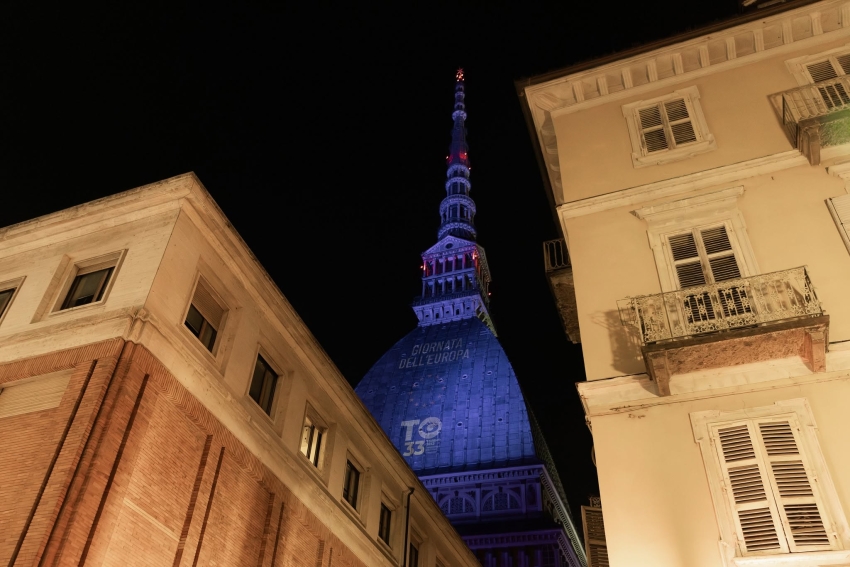 Torino, Mole Antonelliana
Photo by Turin 2033
Some people build a bid by weaving together a programme or a calendar of events. Not Turin. ‘Acupuncture’ is the word Agostino Riitano, director of Turin’s bid for European Capital of Culture 2033, uses to describe his work on the city: small, targeted interventions, in concentric circles, to put back into circulation energies that are already there.
It is no accidental metaphor for a city that has reinvented itself several times: political capital, capital of the car industry, then Olympic city, and today searching for a new identity spanning universities, research and technology.
At the heart of it lies a precise wager: that the bid is already, in itself, a major cultural project for the city. So far it has involved more than 600 people locally, from 200 organisations. Whatever the outcome, the work of building the bid will leave its mark – a legacy.
Let’s start with the institutional structure. Who is leading the bid, and how is it organised?
The process was formalised in February 2025 with the creation of a strategic board bringing together the City of Turin, the Metropolitan City, the Piedmont Region, the Chamber of Commerce, the University of Turin, the Politecnico di Torino, Fondazione Compagnia di San Paolo and Fondazione CRT. The board designated the Fondazione per la Cultura Torino, wholly owned by the City, as the implementing body. The Foundation appointed me director, with the task of building the team and responsibility for all activities directly linked to the Capital of Culture.
How large is the operational structure today?
A team of more than ten people works on the bid every day. Around this core we have built a network that has already involved more than 600 people locally, from 200 organisations: an ecosystem of energy and expertise that has contributed, and will continue to contribute, to the projects developed so far.
Eight organisations around the table, public and private. Doesn’t that make it harder to build a shared vision?
On the contrary, it’s an asset. In Turin, collaboration between public bodies, and between the public and private sectors, has a thirty-year history. Each player brings a piece of heritage, research or expertise, and that knowledge converges. It is part of the city’s identity, and it is also the method Turin is putting forward to Europe.
What is the timetable for the next steps?
The Ministry of Culture’s call for applications is expected to be published by December 2026. A window of about a year will then open, at the end of which we will formally submit our bid book. The evaluation phase and the designation will follow, during 2028.
But the idea of a bid isn’t a new one…
No. The city first put it forward in 2018, through a motion tabled in the culture committee by then city councillor Stefano Lo Russo – now the mayor – which was approved unanimously. Hearings with experts and stakeholders followed, along with a very thorough study. After the pandemic, in 2024, the city took up the idea again, leading to its formalisation in 2025.
Where does Turin stand in relation to how the title has evolved in recent years?
Over the last 10–15 years there has been a shift from ‘prestige’ cities – the great capitals of culture, from Athens to Berlin – to an interpretation of the title as a strategic policy tool for integrated development. I’m thinking of Matera 2019 and Oulu 2026. Our bid follows in that tradition, with one difference: Turin is a large city that is already very well equipped in cultural terms. We are not working on a special programme of events for 2033, but on a cultural development strategy for the decades ahead. The ambition is that, in its year as Capital, Turin becomes a European laboratory for testing development pathways that can be transferred to other cities.
You talk about ‘acupuncture’. In practical terms, what does that mean?
It means treating the city as a living body, with a holistic approach. We intervene with specific stimuli, in concentric circles, to connect the energies emerging in different parts of the city. We work on phenomena common to many European cities: not to ‘tackle a problem’, but to engage with the present and with how the city can stay porous to change. Co-creation is our hallmark: our methods and tools are designed to make the city listen to the needs of its citizens, without hierarchies.
What does co-creation mean in concrete terms?
Let me explain through ‘L’Europa è di casa’ (‘Europe Is at Home’), the project launched last spring that brings artists and residents into direct contact in the Case del Quartiere (Neighbourhood Houses) – local social infrastructures that are unique in Italy. Eight artists, selected through an international open call that drew 80 applicants from various countries, are working with groups of residents to create a work in each of the eight Houses, from the Casa nel Parco to the Bagni Pubblici in Via Agliè. The artist is at the service of the citizens’ needs: the aim is to pick up on project ideas that residents genuinely care about and strengthen them through the artists’ perspective. The outcome will be eight proposals that will go into the bid book. The project is run by the Rete delle Case del Quartiere together with the Fondazione per la Cultura Torino, BJCEM and the Accademia Albertina.
The bid book will have two thematic pillars: books and artificial intelligence. How do you work in a field that changes as fast as AI?
The transformations brought by artificial intelligence are so rapid as to be almost unpredictable, and this leads us to focus on the human component: on our intellectual contribution and on the role that cultural heritage, both tangible and intangible, can play in AI’s generative processes. For more than a year a think tank has been working with the city’s main players in this field: AI4I, the only Italian public foundation dedicated to artificial intelligence in industrial processes, based in Turin; Fondazione CRT; Fondazione per l’Arte CRT; Fondazione ISI; Politecnico di Torino; Planet Smart City; Lift; UniCredit; and Fondazione Compagnia di San Paolo. These organisations invest in technological infrastructure; together with them we also want to build a values-based pathway, to which we can contribute through our work on heritage.
And books, the other pillar of the bid book: what shape is that taking in the city?
The most tangible sign comes on 11 December, with the opening of the new Central Civic Library in the former Torino Esposizioni, the complex designed by Pier Luigi Nervi along the Po. It is called Vale: the name is short for Valentino and also echoes valore, Italian for ‘value’ – the value of culture. The hub links the park, the Borgo Medievale, the Teatro Nuovo, the Botanical Garden, University buildings and the Politecnico’s new campus dedicated to architecture, design and planning. Its programme is curated by the Fondazione per la Cultura Torino – the same body leading the bid – and is part of the journey towards 2033: it was previewed this autumn with the series ‘La biblioteca immaginaria’ (‘The Imaginary Library’) and will get fully under way in 2027, starting with Biennale Democrazia in April. This is the kind of legacy we are talking about: a cultural venue with a clear purpose, serving the city.
What legacy should the bid leave beyond 2033?
Turin already has substantial cultural assets. What the Capital title would leave behind are tangible and intangible legacies linked to today’s challenges. It is not only about strengthening cultural venues, but about giving them a clear purpose, including helping to address the city’s emerging vulnerabilities. And in any case, the bid process itself is already the first legacy: a generative undertaking that will endure, whatever the outcome.
What does the city still need in order to be ready for 2033?
Turin already has a top-tier cultural ecosystem, from neighbourhood organisations to major institutions, and it is investing in strategic sites such as the new Civic Library and the Cavallerizza Reale. The challenge between now and 2033 is to make a further leap in scale, building on existing international relationships and multiplying opportunities for cultural cooperation and production with other European cities and communities. It is not simply a matter of strengthening Turin’s presence in Europe, but of making the contribution Turin can offer to Europe’s cultural future ever more recognisable.

Ecocnews Founder, Journalist, repentant jazz guitarist, music critic and film lover.
Online newspaper based in Matera
EcocNews is registered at the Court of Matera in the press register n. 2/2021
Editor in chief: Mariateresa Cascino. Founder and editorial director: Serafino Paternoster
via San Francesco, 1 - 75100 Matera (Italy)