

Online newspaper based in Matera
EcocNews is registered at the Court of Matera in the press register n. 2/2021
Editor in chief: Mariateresa Cascino. Founder and editorial director: Serafino Paternoster
via San Francesco, 1 - 75100 Matera (Italy)



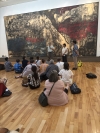
 Eu japan Fest Meet up ECoc
Photo by EcocNews
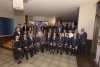
Eu japan Fest Meet up ECoc
Photo by EcocNews
Five days of intense work, meetings, and visits. One interminable day in Tokyo. Four days in Okinawa, where everything constantly harks back to the past of American bombings and occupation. This is the program prepared by the dedicated Eu Japan Fest team, led by Deputy Secretary General Jiro Kogi, for the representatives of the cities that will be European Capitals of Culture until 2030 in the second year of "Meet Up Ecoc Face to Face."
I participated in this year's adventure for Ecocnews after also attending the first initiative, which took place last year.
First, some general considerations. For the first time, the Secretary General of Culture Next, Stefan Teisanu, was invited to participate under the collaboration agreement with Eu Japan Fest: this agreement extends the interest in the Japanese cultural world that Eu Japan Fest is able to engage with all the cities participating in Culture Next, and vice versa.
The Tokyo event featured a very important phase of meetings between artists and ECOC representatives, which focused on topics of interest previously identified by the representatives, thus informing the selection of meeting requests. It would be interesting to dedicate more time to this part of the program in the future.
The Okinawa Days introduced us to the reality of this beautiful island in southern Japan, with visits to the most important cultural sites in the cities of Naha and Nago and a long and in-depth meeting with representatives of various cultural institutions in Okinawa Prefecture and a large number of local artists. What struck me most was how deeply the memory of the devastation wrought by the Americans in 1945 and their occupation until 1972 still weighs on all aspects of the island's cultural, social, and civic life. We will explore this topic further in a future article on the Okinawa Days. Now, let's focus on the Tokyo event. It took place in the headquarters building of Sumitomo, one of the important sponsors of Eu Japan Fest, in the area called Mirai Lab Palette with installations curated by TeamLab. One of them with the title “Continuous life in cubes of copper light” is explained as follows: “In a copper light cube, the flowers change with the actual season throughout the year and continue to change forever, influenced by the behavior of people.The copper color refers to the copper of the Besshi Copper Mine, which was opened in the late 17th century, and continued to support the core of the Sumitomo business for over 283 years. Flowers mean change and continuity by repeating life and death eternally while changing two to the behavior of the people who live in the present moment. Light refers to the future and hope.
By Continuously changing from its inception to the present and into the future, We hope that this work will become a symbol of continuously creating new value”.
The whole morning was spent in face-to-face meetings between the Japanese artists who had booked and the representatives of the European Capitals of Culture until 2030: Samu Forsblom, Programme Director Oulu 2026, Petra Mikulasova Project Manager for international collaboration, Trencin 2026, Martin Moizis Manager for the European dimension and International relations, Trencin 2026, Anna Priedola, Creative Producer of Program development, Liepaja 2027, Matej Vlasanek Program Director Budweis 2028, Jean Francois, Chougnet President of the Board Bourges 2028, Zvonko Naumoski Head of Operations Skopje 2028, Narta Ryczkowska, International’s Relations Manager and Program Curator, Lubljin 2029, Sofia L. Maatta, Acting Project Manager Kiruna 2029, Kelly Diapouli Artistic Director, Larnaka 2030, Nemanja Popovic, Program Director, Liepaja 2027, and Nemanja Popovic, Program Director, Liepaja 2027. Director, Niksic 2030, Stefan Teisanu, Secretary General, Culture Next. The meetings were scheduled to last fifteen minutes each to allow for a significant number of discussions. The ECOC members evaluated the majority of the meetings positively and now look forward to continuing their contacts remotely.
Deputy Secretary General Jiro Kogi introduced the second part of the meeting by illustrating the work of the EU Japan Fest Japan Committee (EUJF) in supporting relations between the Japanese cultural world and the European Capitals of Culture. This work has been ongoing for over thirty years, involving thousands of artists and promoting them in Europe: in 2025 alone, EUJF supported 74 projects for 484 artists. Mr. Kogi outlined the key elements of his organization's work to untangle global social issues through culture and the arts: youth empowerment, diversity, nature coexistence, and social regeneration.
The 34th Chairman of Eu-Japan Fest, Masayuki Hyodo (here the interview), Chairman of the Board of Directors of Sumitomo Corporation, greeted those present, emphasizing the importance of this event, which aims to bring together representatives of future European Capitals of Culture and Japanese artists face-to-face to compare and connect these two worlds. This is a tremendous opportunity to lay the foundations for a fruitful collaboration, which Eu-Japan Fest has been working hard to achieve for a long time.
Three "Cross Talks" were then held to explore specific themes in greater depth. The first featured representatives from Oulu, Trencin, and Lublin, who, with the help of Saori Hakoda, Eu-Japan Fest Japan Committee Program Director, introduced the social issues and vision each city is tackling.
The second cross-talk, titled "The destruction and creation of society brought by art," was introduced by facilitator Seiichiro Yonekura, who, along with Etsuko Watari and Koichi Watari, Director and CEO of Watari Museum of Contemporary Art, illustrated their museum's practices and projects to demonstrate the relationship between art and society, citizens and the economy. Dr. Yonekura provided some very interesting insights into global culture. One example was the growth of major international events, comparing those of 2000 with those of today: Japan from 30 to 85, Italy from 45 to 126, China from 12 to 115, the USA from 52 to 111, Germany from 48 to 90, and France from 38 to 70.
Artist Akira Fujimoto and architect Yuko Nagayama held the third cross-talk, titled "The Sono Aida (In-Between) of the City," to explore the future vision created by cities, society, art, and culture. Fujimoto handles art projects in the spaces and margins of the city, while Nagayama is active in the domestic and international architectural scenes.
This intense day concluded with an overview of the programs for Liepaja 2027, Budweis 2028, Skopje 2028, and Culture Next, and with a networking reception that further brought together the many Japanese artists and representatives of the ECOCs, expanding the opportunities for future connections.
The Okinawa Days will be covered in future articles.

Alberto Giordano lived different lives crossing fields and places.
Online newspaper based in Matera
EcocNews is registered at the Court of Matera in the press register n. 2/2021
Editor in chief: Mariateresa Cascino. Founder and editorial director: Serafino Paternoster
via San Francesco, 1 - 75100 Matera (Italy)