






Online newspaper based in Matera
EcocNews is registered at the Court of Matera in the press register n. 2/2021
Editor in chief: Mariateresa Cascino. Founder and editorial director: Serafino Paternoster
via San Francesco, 1 - 75100 Matera (Italy)



Jerez and Rabat Città Victoria share the desire and commitment to become European Capital of Culture in 2031.
The Cáceres 2031 bid held a large-scale, intergenerational participatory event this Sunday, bringing together more than 200 people in the Plaza Mayor of Cáceres, consolidating the project as a space for real citizen involvement on the path to becoming the European Capital of Culture.
On Wednesday, 4 February, the fifth meeting of the Liepāja 2027 Supervisory Board took place at the Ministry of Culture of the Republic of Latvia, where key issues regarding the progress, achievements and next steps of the European Capital of Culture programme were discussed.
The mayor, Carolina Darias, the councilor for Culture, Josué Íñiguez, the councilor for Sports, Carla Campoamor, and the team from the LPGC'31 Technical Office, together with Sitapha Savané, president of the Club, present the collaboration agreement between the City Council and the sports organization.
The city consolidates international alliances and showcases its ‘Geography Rebellion’ at the launch of the Finnish city’s cultural year on the edge of the Arctic Circle
The Spanish Ministry of Culture, through the Sub-Directorate General for International Relations and the European Union, has officially announced the nine cities competing for the title of European Capital of Culture in 2031.
In 2032, Denmark and Bulgaria will designate the European Capital of Culture. After Copenhagen in 1996 and Aarhus in 2017, this will be Denmark's third European Capital of Culture. For Bulgaria, it will be the second time after Plovdiv in 2019. In Denmark, several cities have already decided to apply for 2032, including Elsinore.
The Municipal Government formally submits all the required documentation, including the 60-page document containing its Artistic and Cultural Programme, the Bid Book.
What is your opinion on the European Capital of Culture programme? What could be improved? What new features should be introduced? You have until 16 January to participate in the public consultation launched by the European Commission on 3 December to gather citizens' feedback on the European Capital of Culture programme.
On Friday, 12 December, members of the Liepāja 2027 community programme “Neighbourliness” gathered at the Kuldīga Art House for a workshop titled “Forum Theatre for Community Solutions”, facilitated by forum theatre expert Agnese Lapiņa.
Thousands of people enjoyed the show “Around Beethoven’s Ninth Symphony: Rebuilding Humanity”, organized by Cáceres 2031 and held in the historic city, transforming it into a grand stage.
On December 5, 2025, the European Capitals of Culture of 2025 officially handed over their titles to the cities and regions designated as the European Capitals of Culture (ECoC) for 2026.
Representatives from the 43 UfM Member States marked an important milestone at the 10th UfM Regional Forum in Barcelona, convened under the Anniversary theme “Together for a Stronger Euro-Mediterranean Partnership”. Demonstrating unity amid regional challenges, Ministers stressed that the Mediterranean must remain a shared space of peace, prosperity and mutual understanding – and that multilateralism is not optional, but essential.
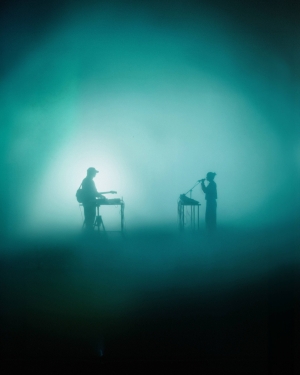
The seventh edition of Open Sound Festival returns to Basilicata at an unprecedented time for the project (EcocNews Mediapartner), with two weekends in December: from the 19th to the 20th in various iconic locations in Matera, and on the 27th and 28th at Castello del Malconsiglio in Miglionico, on the outskirts of the 2019 European Capital of Culture.
On the occasion of Njegoš Day, Montenegro’s national holiday of culture, the Institute of Black Metallurgy in Nikšić hosted an Open Ateliers Day on 12 November 2025 – an event that gathered numerous artists and citizens in a spirit of community and cultural transformation of the city.
On 12th November, the European Commission presented its vision for a vibrant and integrated European cultural landscape with the launch of the Culture Compass for Europe. This forward-looking framework is designed to shape EU cultural policy, to ensure that culture plays a central role in fostering European identity, celebrating diversity, and promoting excellence.
First phase of submissions for Las Palmas de Gran Canaria’s bid for European Capital of Culture 2031 comes to a close. Working teams behind the LPGC’31 technical office are now finalizing the document that will soon be presented before the European jury
The Cáceres 2031 European Capital of Culture Consortium will set up the Office for Cultural Activation next year, which will operate as a permanent regional structure.
Online newspaper based in Matera
EcocNews is registered at the Court of Matera in the press register n. 2/2021
Editor in chief: Mariateresa Cascino. Founder and editorial director: Serafino Paternoster
via San Francesco, 1 - 75100 Matera (Italy)